We have over 24 years of experience handling installation, oversight and business development. It is important to start with the cause, then choose the right service. Sarasota’s wet season groundwater, sewer plans and property specific permits guide the repair. Service life depends on the installed product, site conditions and maintenance.
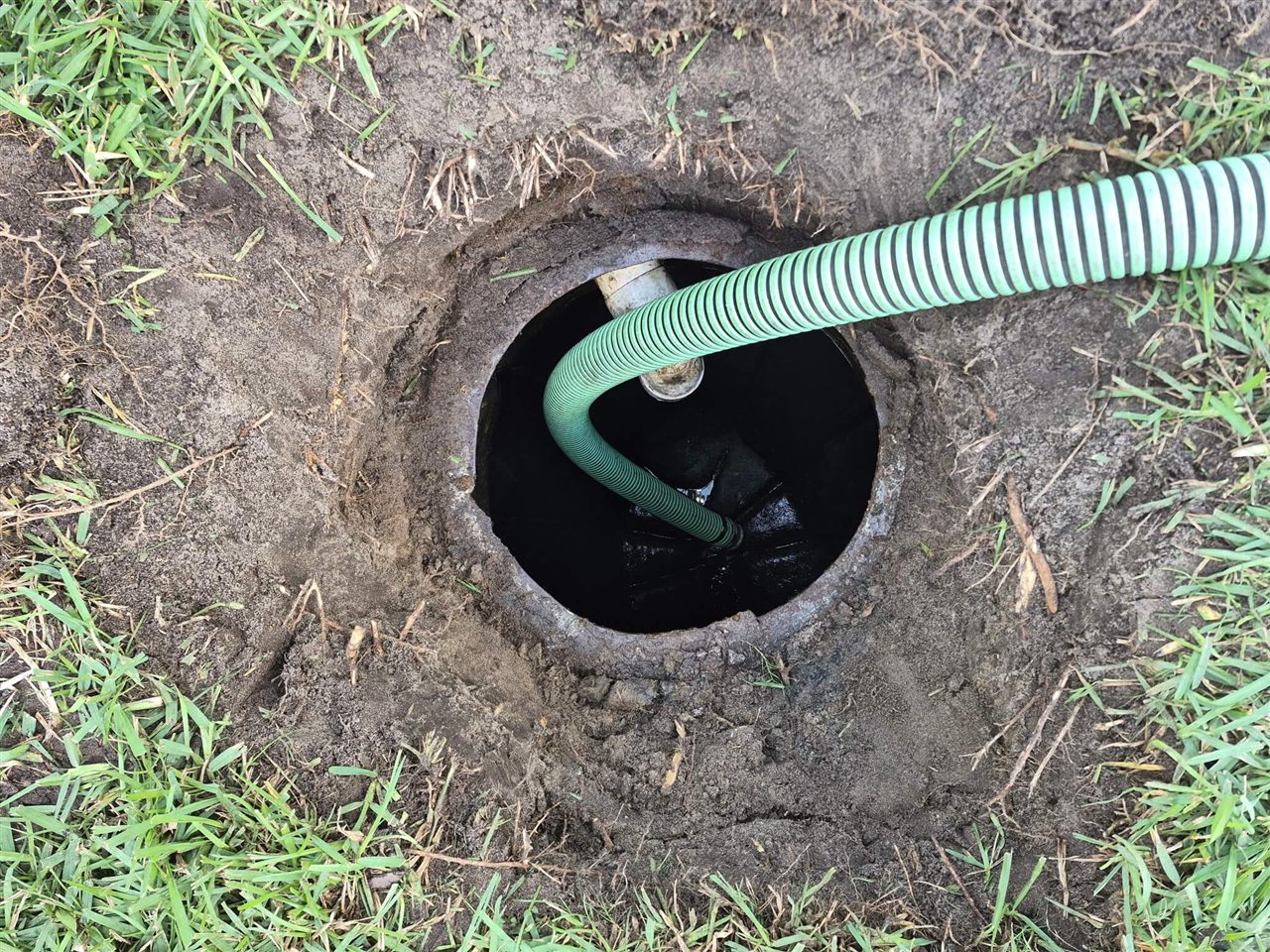
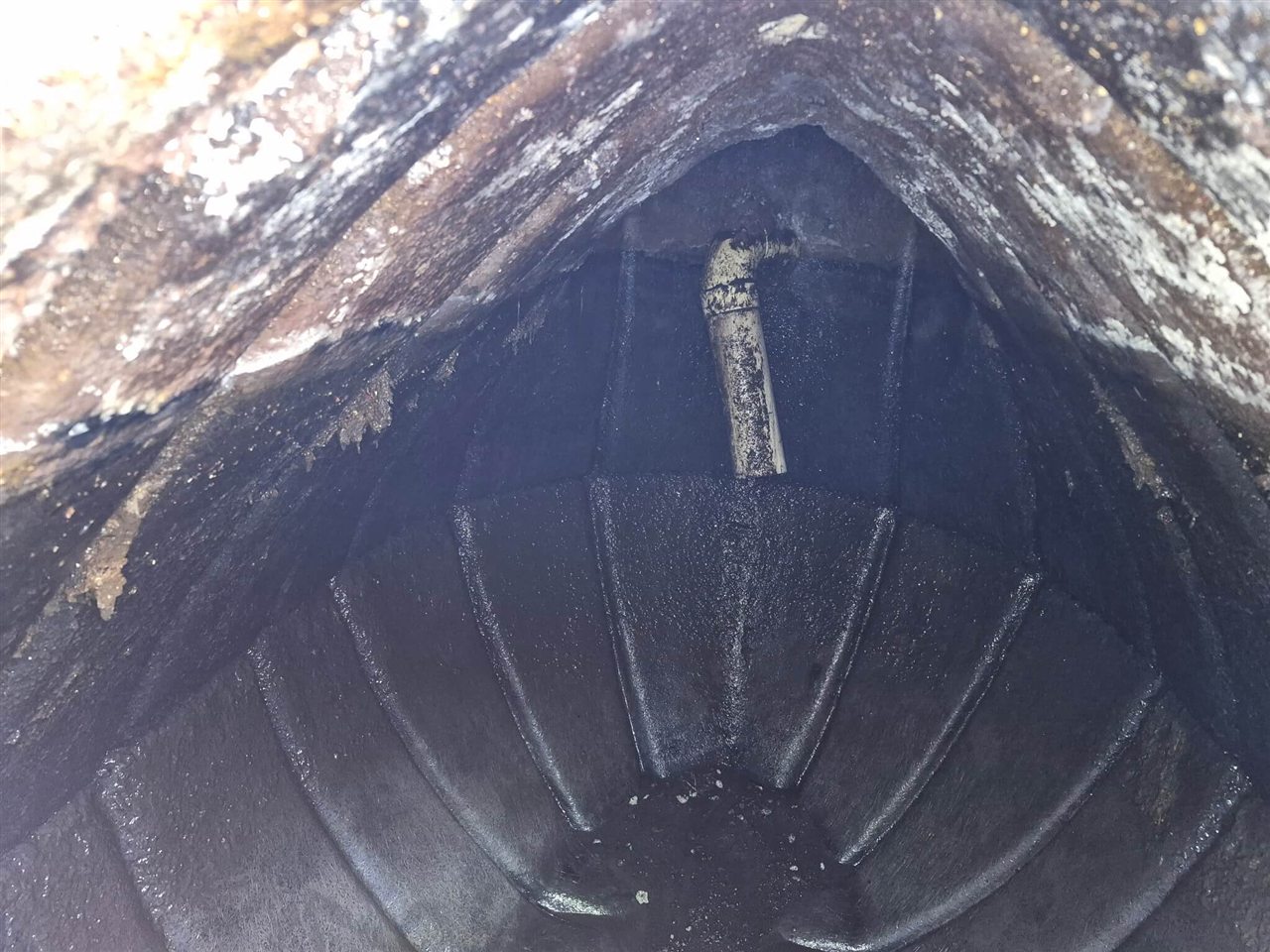
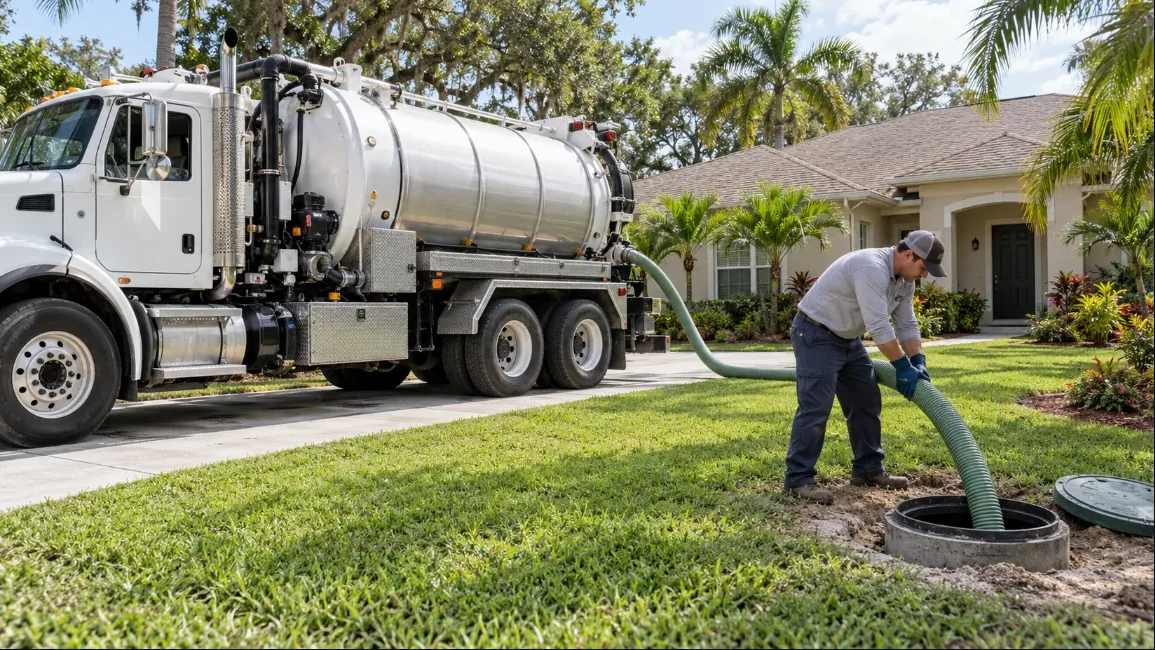
This customer faced a backup and a full septic tank. They arranged a complete pump out with a rinse of the tank walls. We fully pumped the fiberglass tank with approximately 1000 gallons of capacity. Once the tank was empty we rinsed its sidewalls to clear away sludge and scum. We finished with the tank fully pumped and its sidewalls rinsed. Ongoing maintenance still matters because the right pumping interval depends on the tank and household use.
Cost
$475
Timeline to completion
2 to 3 hours
Concrete Septic Tank Replacement
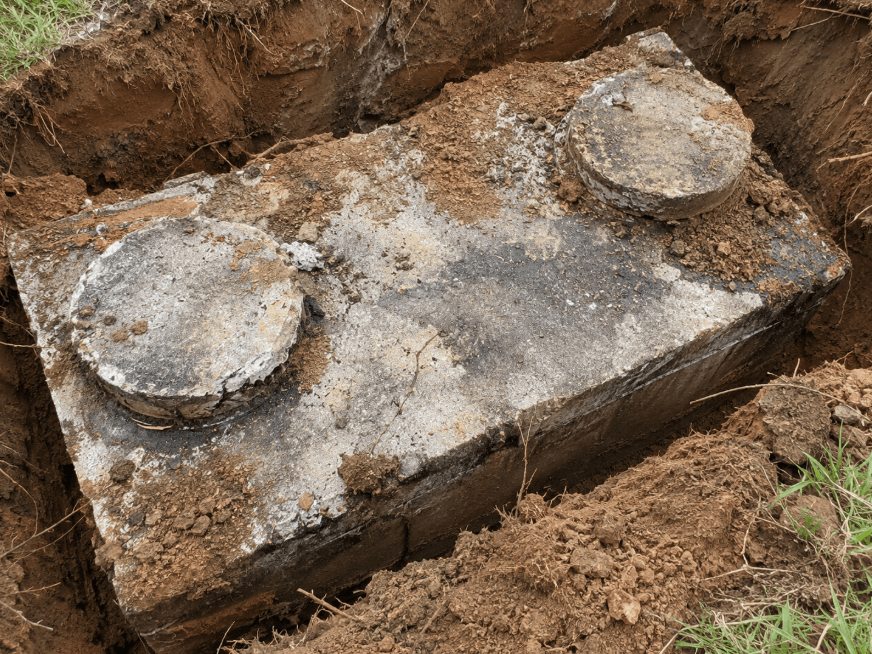
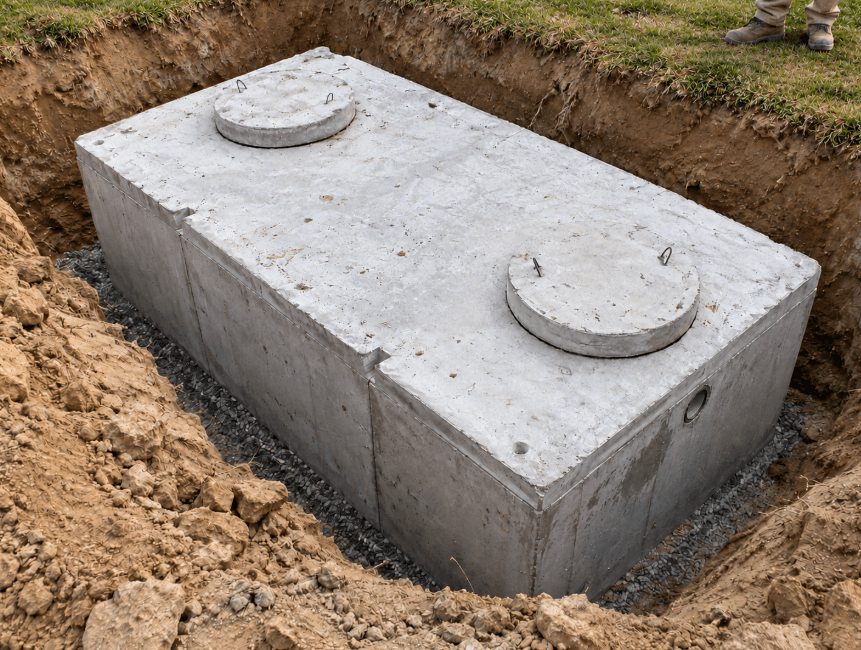
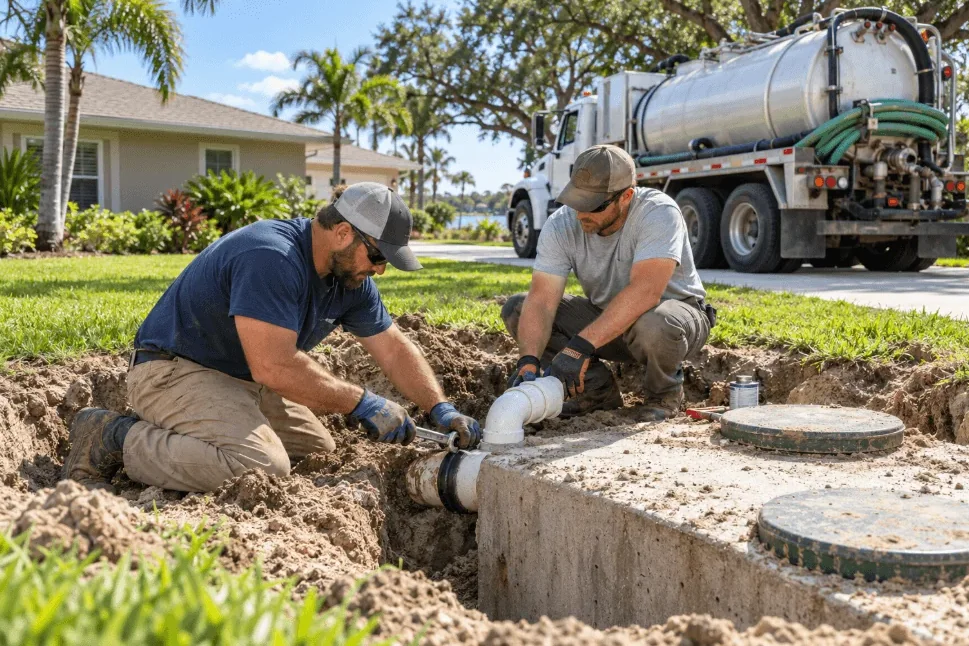
The property owner arranged this replacement because the existing septic tank was past its expected service life. A replacement tank was needed. Our replacement work used a concrete tank with 1000 gallons of capacity. We installed that tank in place of the old unit. We finished the replacement with a 1000 gallon concrete tank in place of the aging unit. The result was a completed tank replacement rather than another pump out of the old tank.
Cost
$9,801
Timeline to completion
3 to 5 days excluding permitting
Residential & CommercialTank & Drain Field ServicesProperty Specific Quotes
The more demanding bedroom or area criterion controls. These are conventional minimum examples, not measured local averages. Advanced and commercial systems need their own design; tank storage and daily flow are different quantities.
Materials and service life
Concrete
Planning estimate: 40 to 50+ years.
Heavy and rigid. Inspect walls and seams for cracking or corrosion.
Fiberglass
Planning estimate: around 40 years; 50 possible.
Lightweight and corrosion resistant. Good support and careful installation matter.
Polyethylene
Potential service life: around 50 years.
Corrosion resistant plastic. Correct burial, backfill and groundwater protection are essential.
Tank shell estimates, not warranties or Sarasota averages. Condition, model, installation and care matter; tanks can fail sooner. Drain fields, pumps and controls have separate lifespans.
Septic types, explained simply
Conventional
A tank separates solids; a suitable soil field treats the liquid. Elevated fill may be needed for groundwater separation.
Aerobic / performance based
Added treatment uses equipment or engineered processes. ATUs and PBTSs have operating permits and service obligations.
Nitrogen reducing
Approved biofilters or advanced treatment reduce nitrogen. Check the parcel’s applicable watershed rules; this is not a countywide requirement for every repair.
Sarasota permits in three steps
01 · Check and design
Confirm sewer status, records, soil and seasonal groundwater. New systems and modifications require engineer designed plans.
02 · Apply before work
Submit application, site plan, floor plan and site evaluation to the local permitting office. Repairs also require a permit.
03 · Inspect and maintain
Complete required inspections. ATUs and PBTSs also need operating permits and a maintenance contract.
Planning time: allow 4 to 6 business days for an initial complete application review as a planning allowance only. No published local turnaround guarantee was found. Design, corrections, workload, construction and inspections can extend the total schedule.
What changes the plan locally?
Wet season groundwater
Seasonal saturation affects usable soil and drainfield elevation.
Sewer conversions
Check Phillippi Creek project boundaries and utility availability first.
Advanced system care
Sarasota lists two year permit renewals and at least twice yearly service visits for ATUs and PBTSs.
Fix running toilets and spread laundry across the week.
Keep lids secure and the service area accessible.
Follow the maintenance plan for treatment equipment.
Don’t
Flush wipes, even those labeled flushable.
Pour grease, solvents or harsh chemicals down drains.
Park, pave or drive heavy equipment over the field.
Assume additives or another pump out fix a failed field.
Septic Questions, Clear Answers
Practical answers for Sarasota homes and businesses.
What size septic tank is typical?
There is no verified local measured average. Florida conventional examples range from 900 gallons for matched smaller home cases to 1,200 gallons for a matched 5 bedroom case. Check the actual permit.
Which system types should I understand?
Conventional tank and field systems, aerobic treatment units and performance based or nitrogen reducing designs. Site conditions and applicable rules determine which fits.
Does Sarasota require engineered plans?
Yes for new systems and modifications, according to Sarasota’s onsite sewage program. Confirm the requirements for a repair with the permitting office.
How long does approval take?
Use 4 to 6 business days only as an initial planning allowance after a complete application, not a county guarantee. Engineering, site work, corrections and inspections add time.
Do advanced units need ongoing permits?
Sarasota lists two year operating permit renewals for ATUs and PBTSs, plus a maintenance contract and at least twice yearly service inspections.
How often should I pump?
Many households begin with a planning interval of 3 to 5 years. Measured solids, occupancy and tank capacity set the actual schedule.
Should I check sewer plans first?
Yes. Sarasota’s Phillippi Creek program converts designated areas to central sewer. Confirm the property’s utility status before investing in replacement.